Among the most beautiful traditions of Mexican culture is the Escaramuza, a form of equestrian performance that combines remarkable horsemanship, graceful presentation, and centuries of ranching heritage. While many people are familiar with the charro, the iconic Mexican horseman, fewer know about the talented horsewomen who preserve an equally important part of Mexico’s equestrian legacy.
The origins of Escaramuza can be traced to colonial Mexico, where Spanish ranching traditions blended with the realities of life in the New World. Horses, cattle, and horsemanship arrived with Spanish settlers and became essential to the development of the vast ranches and haciendas that spread across northern Mexico and what would later become South Texas.
Women of prominent ranching families often became accomplished riders. In accordance with the customs of the era, formal riding was typically done side saddle while wearing elegant dresses. These women, known as hacendadas or simply the ladies of the hacienda, represented both refinement and strength. They managed large households, participated in community events, and often possessed exceptional riding skills of their own.
Over time, these traditions evolved into the modern Escaramuza. Today, teams of skilled horsewomen perform synchronized riding exhibitions featuring precise formations, dramatic turns, and intricate maneuvers while riding side saddle. The flowing dresses, beautifully trained horses, and impressive horsemanship make Escaramuza one of the most admired expressions of Mexican cultural heritage.
This artwork was inspired by that enduring tradition.
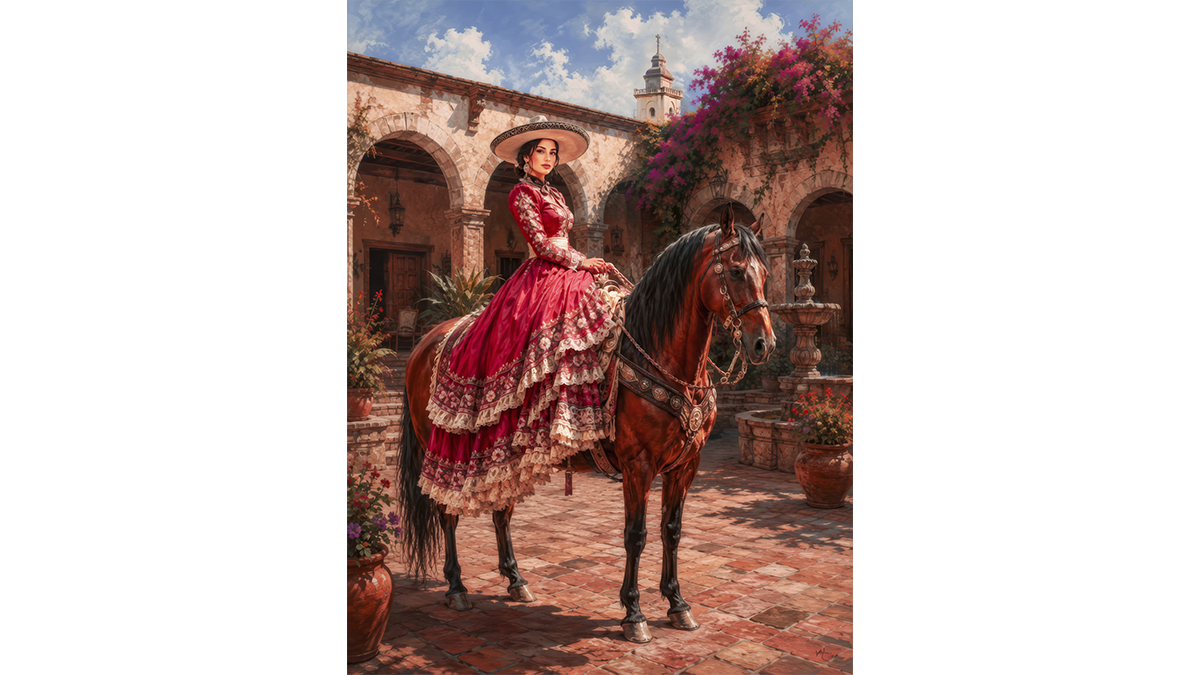
The composition portrays a distinguished hacendada seated gracefully upon a finely groomed horse within a sunlit Mexican colonial courtyard. The scene captures the elegance and dignity associated with the women of Mexico’s historic ranching society while celebrating the beauty of the Escaramuza tradition that continues today.
One of the most striking elements of the artwork is the richly detailed crimson riding dress. Layers of lace, embroidery, and flowing fabric create a sense of movement and luxury, immediately drawing the viewer’s eye. The wide-brimmed charra hat reinforces the equestrian theme while framing the rider’s face with timeless sophistication.
The horse itself serves as a symbol of the deep connection between Mexican culture and horsemanship. Its glossy coat, ornate tack, and poised stance reflect the care, pride, and craftsmanship associated with traditional ranch life.
Surrounding the rider is a warm colonial courtyard filled with architectural details that evoke the historic haciendas of Mexico. Stone arches, rustic pillars, flowering bougainvillea, and sunlit walls create an atmosphere of romance and nostalgia. These elements help transport the viewer to an era when haciendas served as the economic and social centers of rural life.
Artistically, the piece is rendered in Contemporary Romantic Realism, blending historical subject matter with modern visual appeal. The artwork emphasizes clarity, rich color, and refined detail while retaining subtle painterly brushwork that gives the image warmth and character. The vibrant reds of the dress contrast beautifully with the earthy tones of the courtyard and the natural hues of the horse, creating a balanced and visually engaging composition.
For collectors of Western art, Mexican heritage art, equestrian artwork, and Spanish Colonial décor, this piece offers both cultural significance and decorative beauty. It works particularly well in Hacienda-style interiors, Southwestern homes, ranch houses, home offices, libraries, and living rooms where its rich colors and elegant subject matter can become a focal point.
More than simply a portrait of a horsewoman, this artwork is a tribute to a tradition that continues to inspire admiration throughout Mexico and the American Southwest. It celebrates the women whose grace, confidence, and horsemanship helped preserve an important cultural legacy and reminds us that history often lives on through the customs, art, and stories we continue to share today.
Leave a Reply