Across Texas Hill Country, South Texas ranch homes, Spanish Colonial interiors, and even California’s modern spaces, a quiet transformation is taking place. These once distinct architectural styles—each rooted in its own history—are beginning to blend. What ties them together is not structure alone, but a shared visual language: earth tones, natural materials, and a desire for calm, grounded living.
At the center of this evolution is a growing appreciation for abstract art that reflects the land itself.
A Blending of Regional Styles
Traditionally, these design styles stood apart:
- Texas Hill Country homes emphasized limestone masonry, exposed wood beams, and rugged craftsmanship
- Southwestern interiors drew from desert palettes, turquoise accents, and adobe textures
- Spanish Colonial homes featured plaster walls, arches, wrought iron, and warm terracotta tones
- California modern spaces introduced lighter palettes, minimalism, and organic textures
Today, these elements are no longer separate. Builders and homeowners are combining them—limestone with plaster, wood beams with smooth walls, rustic forms with refined simplicity.
The result is a new kind of interior:
👉 Warm, natural, and intentionally understated
Why Earth Tones Are Leading the Way
As these styles converge, bold colors are giving way to something more enduring—earth tones.
Terracotta, sand, clay, cream, and muted turquoise are not just decorative choices; they reflect:
- The soil and stone of the land
- The aging of materials over time
- The quiet beauty of natural environments
These colors don’t compete—they harmonize.
That harmony creates interiors that feel:
- Comfortable
- Timeless
- Rooted in place
The Role of Abstract Art in Modern Western Interiors
In these blended spaces, traditional representational art can sometimes feel too specific—too tied to one narrative or era.
This is where abstract art becomes essential.
Abstract work does something unique:
- It echoes nature without defining it
- It allows materials—stone, wood, plaster—to remain the focus
- It creates movement without visual noise
Instead of telling a story, it creates a feeling.
And in modern interiors, feeling matters more than ever.
How This Southwest Abstract Desert Landscape Works
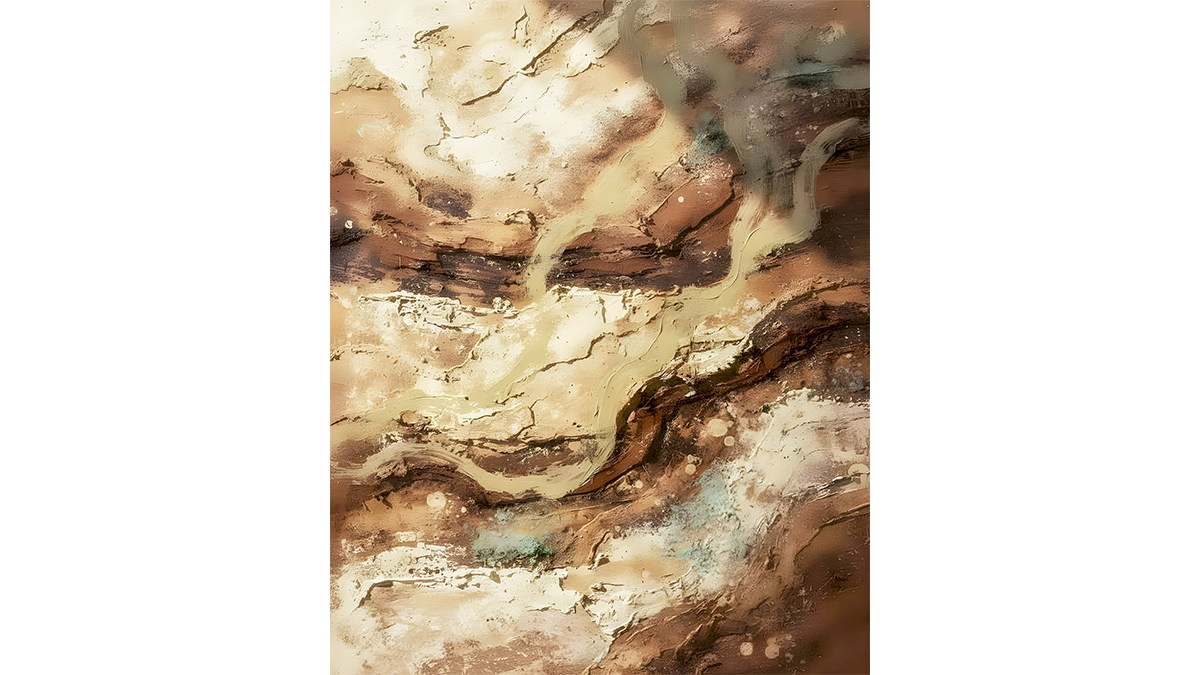
This Southwest abstract desert landscape giclée print was created with that exact intention—to reflect the land while remaining open, calm, and adaptable.
🎨 Color Language
The palette draws from the environments that define these homes:
- Terracotta and clay tones mirror soil and tile
- Warm sand and cream reflect limestone and plaster walls
- Muted turquoise accents suggest mineral deposits, sky, and distant water
These tones are not random—they are architectural companions.
🧱 Texture and Movement
The layered, flowing composition reflects:
- Eroded rock formations
- Shifting desert terrain
- Natural stratification over time
This movement helps soften the hard edges of:
- Stone fireplaces
- Wood beams
- Angular furniture
👉 The result: a visual balance between structure and softness
🏡 Architectural Compatibility
This piece was designed to live naturally within:
- Texas Hill Country homes with limestone and dark wood
- Spanish Colonial interiors with plaster walls and warm light
- Southwestern spaces with desert tones and natural textures
- California modern homes seeking warmth within minimalism
Rather than competing with these elements, the artwork connects them.
Creating a Calm, Cohesive Atmosphere
Modern homeowners are increasingly drawn to spaces that feel:
- Peaceful
- Grounded
- Lived-in without clutter
Abstract earth-tone artwork plays a key role in achieving this.
It:
- Softens contrast
- Blends materials
- Adds visual interest without overwhelming the room
👉 It becomes part of the architecture—not just decoration
A Return to Simplicity and Place
In many ways, this shift toward abstract, earth-toned art reflects something deeper—a return to the land itself.
Homes are no longer designed to impress through excess, but to:
- Reflect their surroundings
- Support daily life
- Create a sense of calm
This Southwest abstract piece follows that philosophy.
It doesn’t demand attention.
It earns its place quietly, through balance, tone, and connection to the natural world.
Final Thoughts
As Texas Hill Country, Southwestern, Spanish Colonial, and California styles continue to merge, one thing becomes clear:
👉 The future of these interiors is not louder—it is warmer, softer, and more connected.
Abstract desert-inspired artwork—rooted in earth tones and natural movement—will continue to play a central role in that evolution.
Because when art reflects the land,
it doesn’t just decorate a home—
it belongs to it.
Leave a Reply